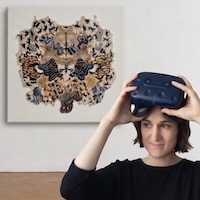
A private club for art lovers, from beginners to seasoned collectors, with a unique approach to the co-ownership of carefully curated young art with great potential.


Talks, studio visits, visits to art institutions, discussions with gallerists, collectors, investors and curators. An app with podcasts, videos and articles you will not find anywhere else. An art vocabulary for those just starting out, and the Eduteka learning hub in the members' app for the more advanced.

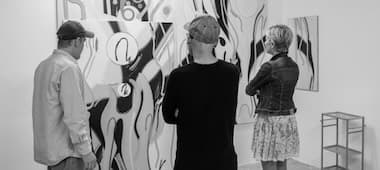
Every month, a selection of works you can take a share in. Co-ownership of artworks you can join from a few hundred crowns. The club takes care of storage, insurance and the care of the work, arranges offers for its sale and, if you wish, hangs the work in your home.

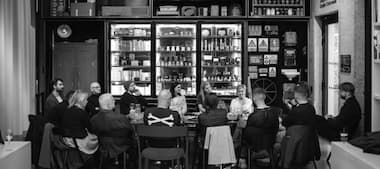
Private views, visits to studios and collectors' homes, art parties and trips together. People who share your interest and your appetite to learn more, and with whom you can go deeper in conversation.



01
I want to buy art.
„You can take part in purchases you wouldn't get to on your own, or wouldn't want to buy outright.“
Hanka K.
02
I want to actively explore art market.
„I value the expert oversight of my collection, meeting people who share the same passion, and the studio visits, lectures and debates with gallerists.“
Oldřich L.
03
I want to start a collection.
„I joined to start building my own collection. I recommend the club to people who want to step out of their exact world.“
Magda P.
Consultations are led by Anna Pulkertová, the founder of the club. No sales pressure, just a conversation.
Would you like to compare the tiers in more detail? To see what each membership includes and what it costs?
One work, four chapters
01
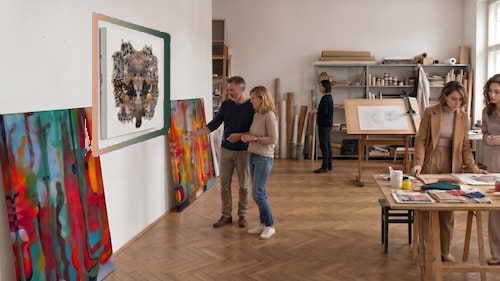
We regularly visit studios, private views and art institutions. We are a community that shares the same passion. You get tips from the cultural scene as well as educational content.
02
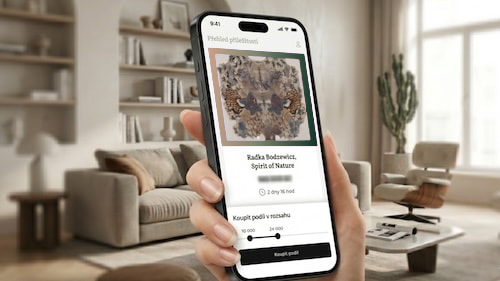
In our app you can see the carefully curated works currently available to buy. You can take part in a purchase through co-ownership from a few hundred crowns up.
03
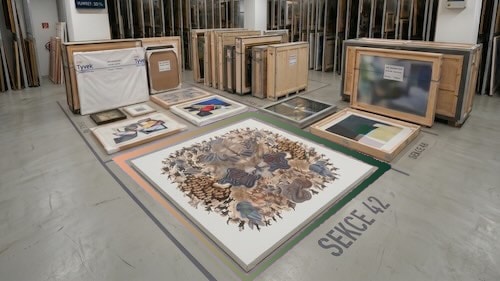
After the purchase, Art Part Club takes care of the work. We arrange transport, storage, proper care and insurance. Or you can borrow the work for your own home and enjoy it in person.
04
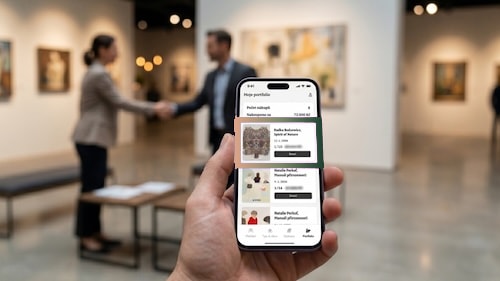
We work with the artists we buy over the long term and help make them more visible. The club arranges offers for the work, and its co-owners decide about a sale by majority vote.
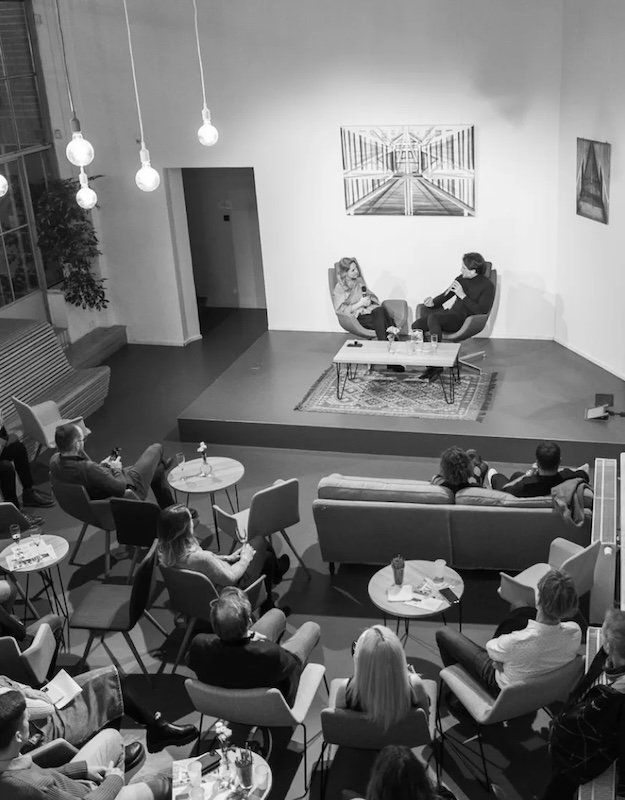
I hold to four guides: innovation, an informed grasp of history, the relevance of the subject, and the artist's fidelity to their own purpose. When a work stands up to all four, there is a good chance it will stand up over time too. Quality and the current price are not the same thing — which is precisely why it pays to be able to tell them apart.
Fractional (co-)ownership means that a single artwork is owned jointly by several people. Each holds a share corresponding to the portion of the purchase price they contributed. So you don't buy the whole canvas but part of it, and that lets you reach works you might not be able to afford on your own.
Why does it make sense? The art market is large and expensive. According to the Art Basel and UBS report, art worth USD 59.6 billion was sold in 2025, and the prices of quality works often exceed an individual's budget. Co-ownership lowers the entry threshold and makes room in the market for new collectors too.
At Art Part Club it works through three contracts. You and the other members conclude the purchase agreement directly with the artist or another seller; the club is not a party to it. The agreement on the exercise of co-ownership rights confirms your shares and the rules for joint decision-making. And with the management agreement you entrust the work to the club, which stores it, insures it and arranges for it to be exhibited.
“Co-owning art is often the first step towards a collection of your own,” says Anna Pulkertová, founder of Art Part Club. Find out more about how co-ownership works on the Co-ownership page, and about the term in the vocabulary under fractional ownership.
Art is not just decoration for a wall; it measurably does you good. A large British study of ageing links regular visits to galleries, museums and theatres with a longer and healthier life (English Longitudinal Study of Ageing, BMJ 2019), looking at originals measurably lowers stress, and even a few minutes with art has been shown to lift the mood and ease loneliness (Frontiers in Psychology, 2022). The more art you have in your life, the richer that life is — and we do not mean only financially.
The most important advice is this: buy mainly what you genuinely like, and set yourself a ceiling you will stick to. The most accessible way in tends to be works on paper (drawings, watercolours or prints), where even better-known names can be had for a fraction of the price of their paintings. Take your time and don't let yourself be pushed into a decision.
The choice is wide, even if the headlines are filled mainly with records. According to Artplus.cz, 5,577 lots sold at Czech saleroom auctions in 2025. Only a handful of them make the headlines, and among the rest you can find first pieces for a collection too.
It also helps to go where art is made. End-of-semester shows and graduate exhibitions (final works by art school students), studios and smaller galleries will show you artists before people start talking about them.
And if you are drawn to a work you couldn't afford on your own, try co-ownership: at Art Part Club you can join the purchase of a work from a few hundred Czech crowns. “Your first work doesn't have to be the investment of the century, it's enough that it brings you joy,” says Anna Pulkertová, founder of Art Part Club. Find out more about paper in the vocabulary under works on paper.
There are several routes, and each has its own logic. Galleries offer reassurance and advice, auctions excitement and opportunity, online platforms convenience, and co-ownership opens the door even on a smaller budget. No route is best for everyone. Your best protection is always a verified seller, documented provenance (ownership history) and documentation for the work.
Online purchases are not as dominant as it might seem. According to the Art Basel and UBS report, online sales amounted to USD 9.2 billion in 2025, that is 15% of the global market and the lowest share since 2019. It seems that meeting a work in person still plays a big role.
Wherever you buy, ask about the work's origin, about a certificate of authenticity or an expert opinion, and whether the work is listed in a scholarly catalogue of the artist's oeuvre. When the answers are missing, slow down.
In co-ownership at Art Part Club you buy the work directly from the artist or another seller. In the purchase agreement, the seller declares that they are the sole owner of the work and either its author or the person authorised to exercise the economic rights of copyright, and they hand over a certificate of authenticity at signing. “A buyer's best protection is a verified source and a work with a documented story,” says Anna Pulkertová, founder of Art Part Club. Find out more on the Co-ownership page and in the vocabulary under provenance.
At Art Part Club you can join the purchase of a work from a few hundred Czech crowns. You will see the exact minimum amount for each work in the app, as it depends on the work's price. You buy the work together with other members directly from the artist or another seller, and each of you owns a share corresponding to your part of the purchase price.
Why does this matter? Because art prices can be dizzying. According to ČTK, the Czech News Agency, as of November 2025 the most expensive painting ever sold in the Czech Republic was Kupka's Conception/Danae, which sold in April 2024 for CZK 126.5 million. A whole canvas like that is out of reach for most of us; a share in a quality work is not.
Art Part Club is not a party to the purchase agreement. It selects the work, organises the joint purchase and, once the work is bought, looks after it under the management agreement: it stores it, insures it and arranges for it to be exhibited. The seller attests authenticity with their declaration in the purchase agreement and a certificate of authenticity handed over at signing.
“A collection doesn't start with a large sum, but with a first decision,” says Anna Pulkertová, founder of Art Part Club. Offers go to members with a paid membership, and you will find the types of membership on the Membership page. Find out more about how co-ownership works on the Co-ownership page.
The Digital Regulatory Sandbox project (ID No. NPO/2) is funded by the European Union through the National Recovery Plan and the Ministry of Industry and Trade.